"I've never been to the mountains — where can I go?" It's the question we get most. A full answer: which mountains suit a start, and how to know you're ready.
The good news: a first summit needs no rock skills, no rankings and no years of training. It needs three things — a non-technical route, proper acclimatization and a guide who takes on everything technical. After that, your endurance and attitude decide.
It's a route with no climbing and no complex ice: the ascent is long walking uphill, sometimes in crampons and on a rope. Everything necessary — moving in crampons, ice-axe self-arrest — is taught right on the program, at the snow training sessions.
More important than "technical simplicity" is the acclimatization schedule. It — not leg strength — determines whether you reach the top.
The highest point of Europe and Russia's most popular "first mountain": developed infrastructure, huts, cable cars and an acclimatization program honed over years. The optimal balance of serious altitude and reliable comfort.
A handsome 5,000er with a real glacier and rope travel — "real mountaineering" in a safe dose. There is a route from Georgia and a wilder route from North Ossetia. The comparison with Elbrus is in a separate article.
The roof of Africa, with no ice and no ropes — a high-altitude trek through four climate zones. Porters carry the camp; you walk with a daypack. A great option if you want altitude without hardware — with a safari after the mountain.
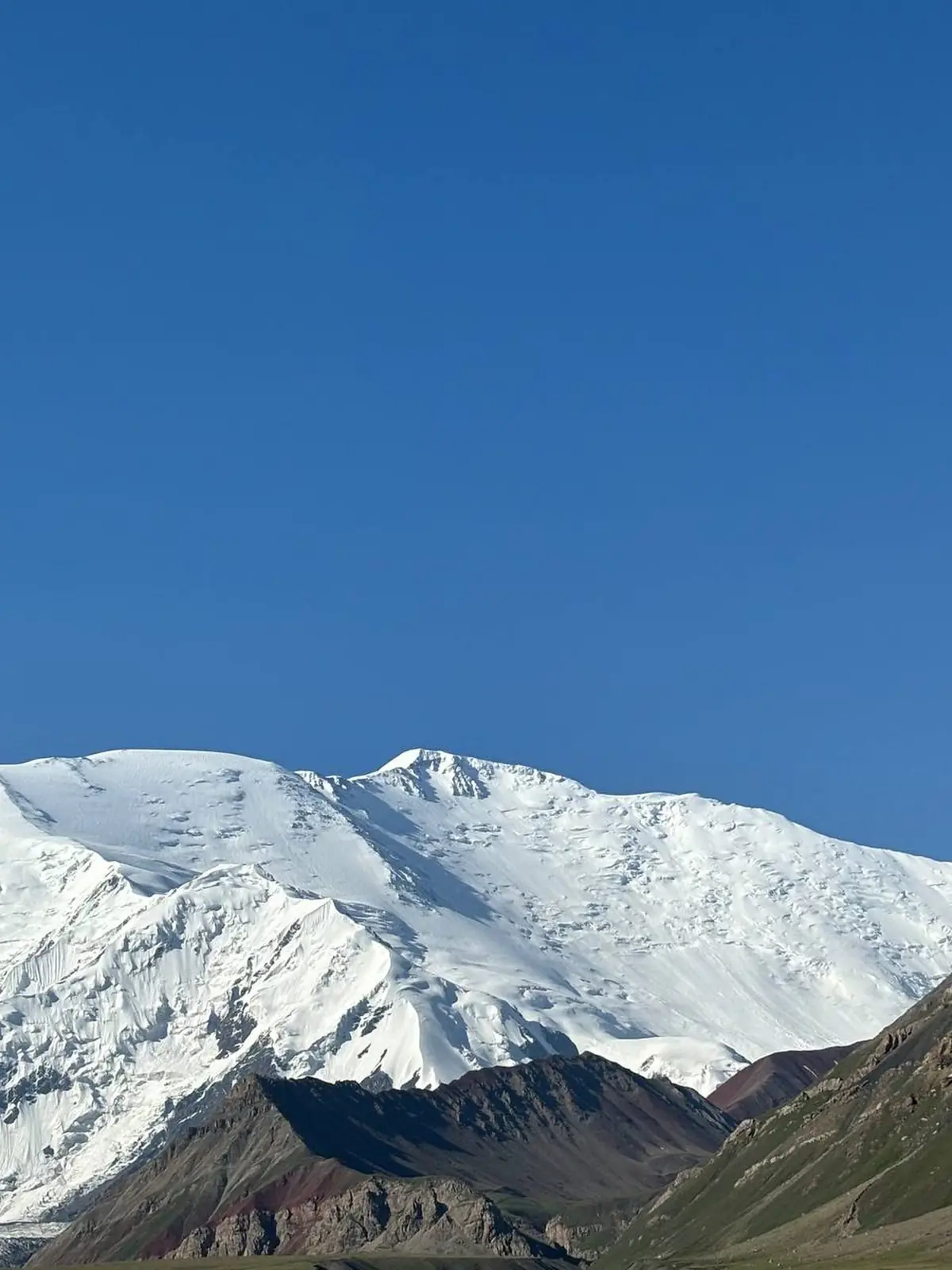
For those drawn to expedition atmosphere: the Lenin Peak base camp in the Pamirs, tents, ice training and a 7,000er filling the view across the valley. A first high-altitude expedition in a gentle format.
A simple test: you can walk for 6–8 hours with a couple of short breaks — and get up the next day and do it again. If not yet, it's a matter of 2–3 months of training; the plan is in our preparation article.
If you would like to reach departure-day shape under supervision — there is our online training program with a coach and a doctor.
Age is not a barrier: our groups have summited at 18 and at 60. The barrier is untreated heart and blood-pressure problems, so see a doctor before your first altitude.
To the program price, honestly add: travel to the starting point, mountaineering insurance (with helicopter evacuation), personal gear rental and pocket money. On Elbrus, for example, the full budget usually comes to 150–180 thousand roubles — what exactly the program includes is always listed on its page.
Not sure where to start — take our short questionnaire: eight questions about your experience and fitness, and we will show the programs that fit. Or just write to us: we'll ask about your experience and shape, and recommend a mountain and dates without sales exaggeration.
Tell us about your experience — we'll match a program and help with training, gear and tickets.
Leave a request Ask the bot in Telegram