Formally it's simple: Elbrus is higher (5,642 vs 5,033), Kazbek is more technical. But for choosing a first mountain, the details matter more.
Elbrus is above all altitude and weather. Technically the classic southern route is simple: a long snow slope where acclimatization, pacing and endurance decide everything. More on that in our preparation article.
Kazbek is lower but more "alpine": a real glacier with crevasses, rope travel, and crampon work that isn't an episode but most of the summit day. The feeling of "real mountaineering" is stronger here.
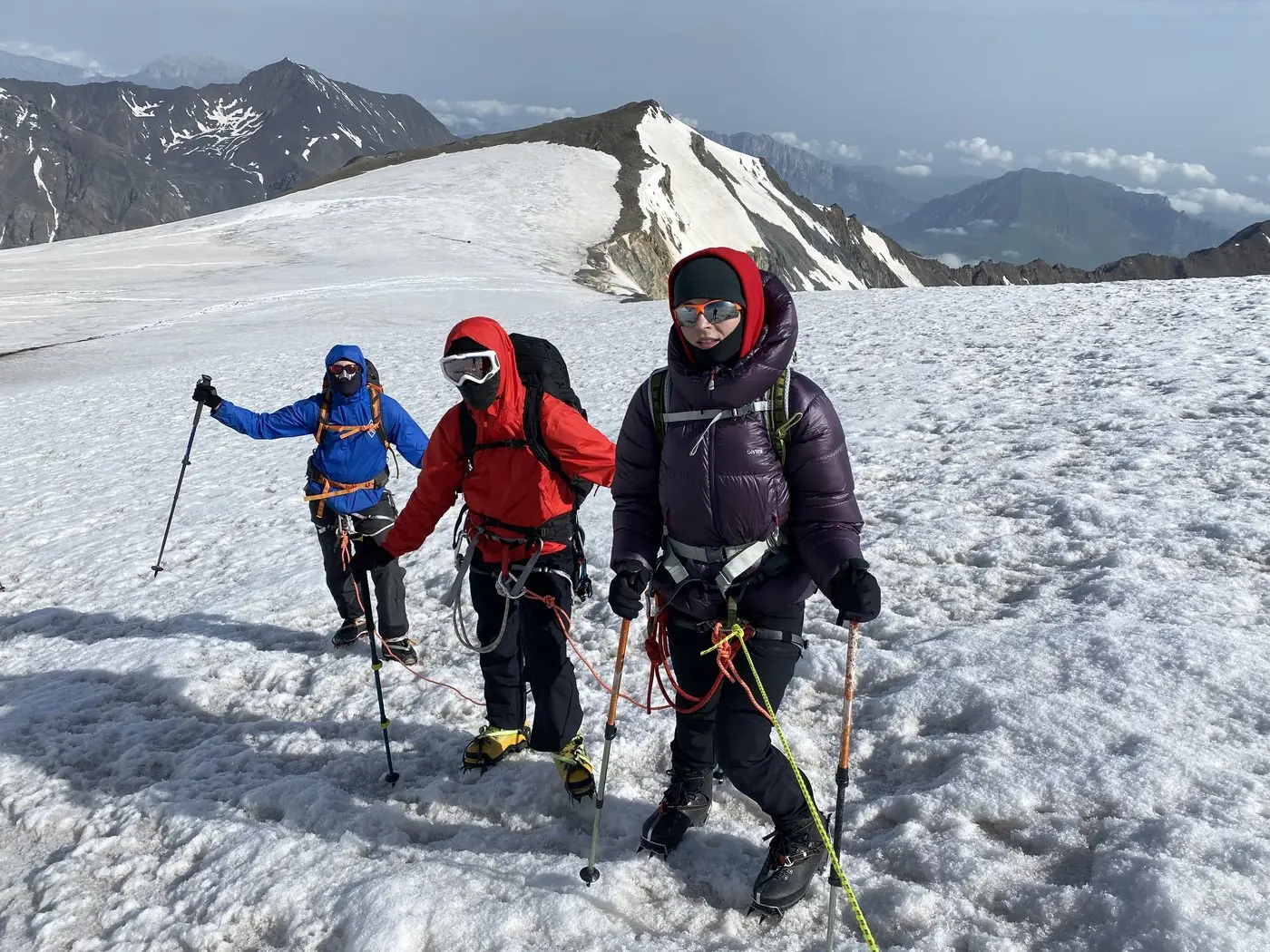
On southern Elbrus — cable cars, huts, snowcats and canteens: daily life is maximally smoothed out. On Kazbek everything is more self-supported: from the south — the Altihut (3,000) and tents by the meteostation (3,700); from the north — tents only. Horses carry part of the load on the Georgian route, but you will still wear a pack.
Elbrus is the simplest option for Russians: a domestic flight to Mineralnye Vody, an internal passport, no borders.
There are two ways up Kazbek. From the south, via Georgia — the classic through Gergeti: you need a foreign-travel passport, no visa for Russians, prices in dollars (from $1,560). From the north, via North Ossetia — no border crossing, but a border-zone permit (we arrange it in advance) and full self-sufficiency: from 115,000 ₽.
If it's your first big mountain and you want the most reliable scenario — Elbrus from the south: infrastructure, a proven acclimatization schedule, simple logistics.
If you have already been to 4,000+ and want a step into "real mountaineering" with a glacier and ropes — Kazbek; pick the side by documents and appetite for autonomy.
The best option is not to choose: the "Elbrus this season, Kazbek the next" pairing builds experience evenly — after which you can look towards the Pamirs and the 7,000ers.
Tell us about your experience — we'll match a program and help with training, gear and tickets.
Leave a request Ask the bot in Telegram