"South or north" is the question we hear more often than any other. The short answer: the south is about your first big altitude with the best summit chances; the north is about wild mountains and self-sufficiency for those ready to carry a pack.
The southern slope is the most developed part of the mountain. A cable car lifts you to 3,780, you sleep in a hut, walk acclimatization hikes with a light pack, and part of the summit-day ascent can be covered by snowcat.
None of this makes the route "not real": summit day still takes 8–12 hours, and the summit is the same — the West Summit, 5,642 m. The logistics simply work for you: 11 days, warm nights, hot meals in canteens.
The flip side is people. In season the classic route is crowded, especially in a good weather window.
The north side is Elbrus as it was a hundred years ago. No lifts, no snowcats, no hotels: base camp on Emmanuel Meadow (2,600), tents at the Stone Mushrooms (3,100), an assault camp at 3,750. Every metre is gained on foot, and we carry our own gear.
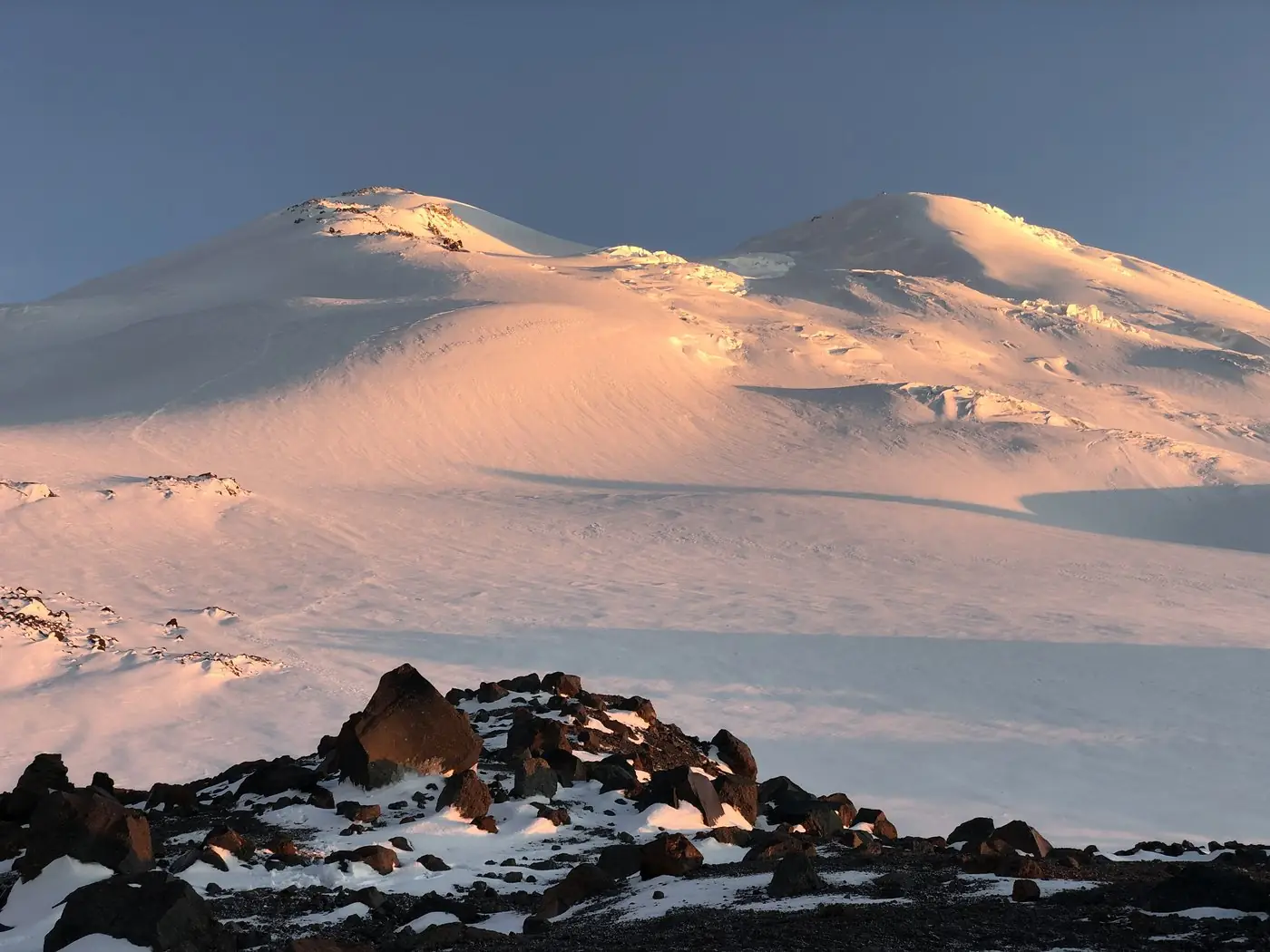
Along the way — the waterfalls and mineral springs of Djily-Su, lava sculptures, and far fewer people. The summit push goes via the Lenz Rocks to the East Summit (5,621); it is longer than the southern one, and the program demands more self-sufficiency.
If this is your first big mountain and the goal is the summit, take the south: the infrastructure raises your chances and forgives mistakes. Read how to prepare first.
If you already have trekking experience, tents don't scare you and crowds do — choose the north. It feels like a full expedition, just 11 days long.
Still undecided — write to us: we'll ask about your experience and advise honestly.
Tell us about your experience — we'll match a program and help with training, gear and tickets.
Leave a request Ask the bot in Telegram